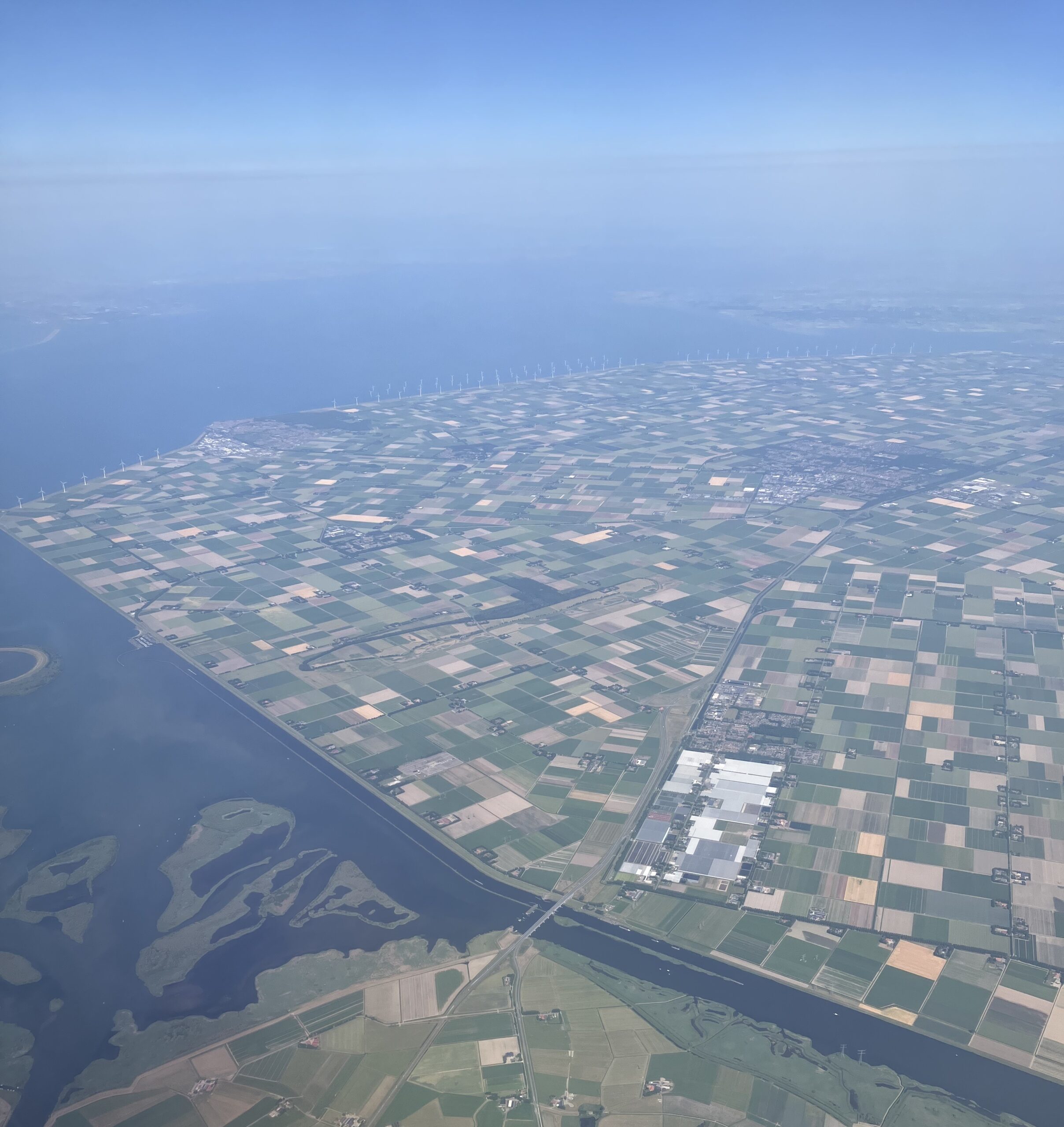
Photo: Jack van der Vorst.
Optimising crop diversity at different spatial scales
How to diversify an agricultural landscape? This is the central question in the recently published research by Thijmen van Loon and colleagues.
Spatial scales
Increasing crop diversity in a landscape can have a positive effect on biodiversity. However, the effect of crop diversity on biodiversity depends on the spatial scale. Some species benefit primarily from diversity at larger scales (more than 1 km), while others benefit from diversity at smaller scales (less than 0.5 km).
How can we increase crop diversity?
Crop diversity can be increased in several ways and these all have a different effect on crop diversity across on spatial scales.
- First, multiple crops can be cultivated in a single field, for example, through strips, blocks, or pixels. Such measures increase crop diversity most at smaller spatial scales.
- Second, new crops could be introduced, this increases crop diversity most at larger spatial scales.
Conclusion: we found that maximum diversity cannot be achieved at all scales simultaneously; there are clear trade-offs in crop diversity between spatial scales.
Method
For this research, the researchers developed a landscape optimization model, which they applied to arable farms in the municipality of Lelystad (Flevoland). They used eight years of cultivation data from existing farms.
Lessen
What can policymakers learn from this? Policies aimed at increasing crop diversity should explicitly define the intended spatial scale(s). Effective strategies should consider a combination of introducing new crops and increasing spatial diversity within fields.
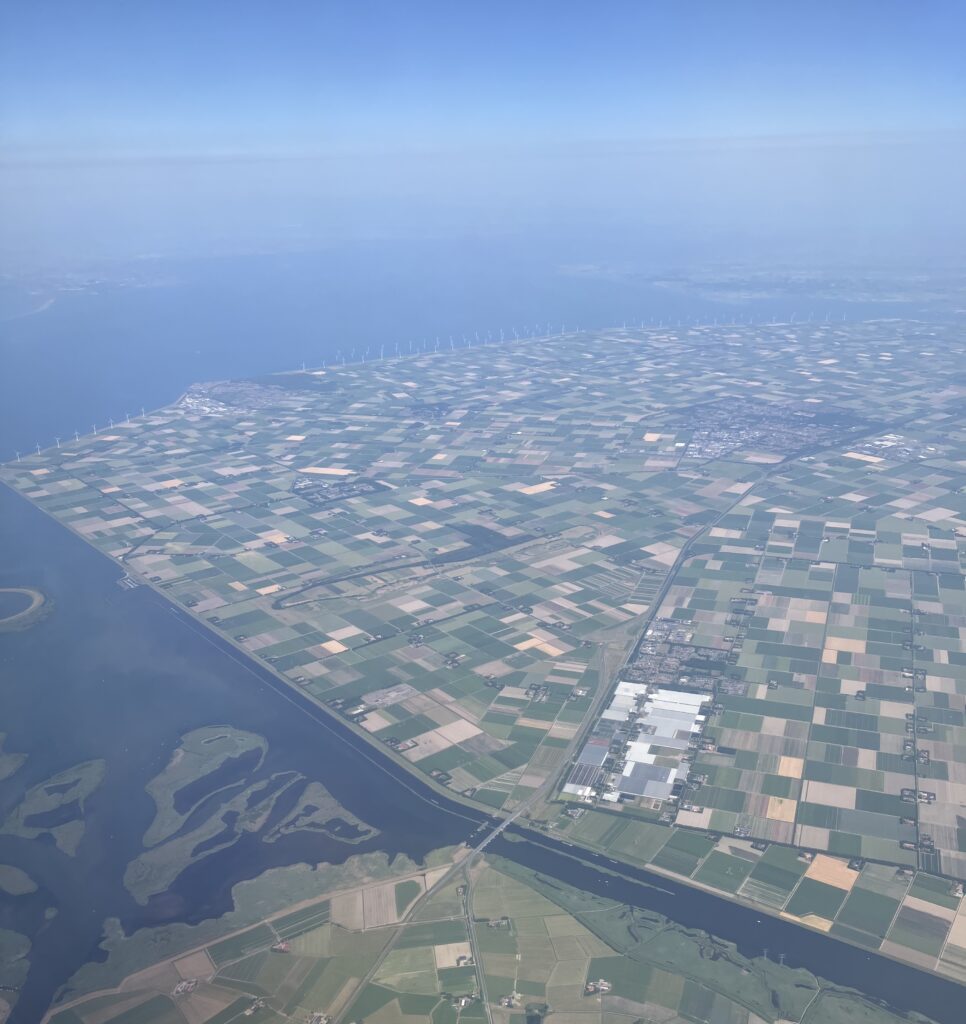
Landschap Flevoland. Foto: Jack van der Vorst.