Socio-economics, technology and logistics /
Logistics and value chains /
Designing agricultural landscapes


Researcher
Thijmen van Loon
PhD candidate
Wageningen University & Research
I am passionate about designing sustainable food systems and have always been fascinated by the origins of our food. The current rapid pace of climate change and the loss of biodiversity greatly concern me. Through research I hope to contribute to this challenge by seeking alternative pathways to these pressing issues. I find motivation in CropMix as it unites a diverse community, including farmers, companies, researchers, and governments, that explores and implements more sustainable farming practices.
Research project
Project: 2.2.2. How can we design agricultural landscapes to increase biodiversity levels and what role can strip cropping play?
It is complex to design agricultural landscapes that improve biodiversity because it matters where which activity is implemented. Should we aim to cluster biodiversity enhancing activities or spread these as much as possible? Are there many farms located next to nature areas? How can different activities be connected?
Moreover, there are economic interactions between farmers to consider. Farmers can exchange resources, rent out land, and or share machinery. How can such interactions hamper or enhance the adoption of strip cropping?
In this research project, we will develop decision-support tools to design biodiversity-enhancing agricultural landscapes, taking into account the landscape-level interactions between ecological and economic processes described above. We believe such a tool can be used to assess the potential of strip cropping and to advise policymakers.
Related projects
- Sustainable production planning and field logistics > Alfaima L. Solano Blanco
- Efficient distribution networks of mixed cropping system-based supply chains > Tuğçe Canbilen Suticen
Results and news
February 2026: New publication 'Optimising crop diversity at different spatial scales'
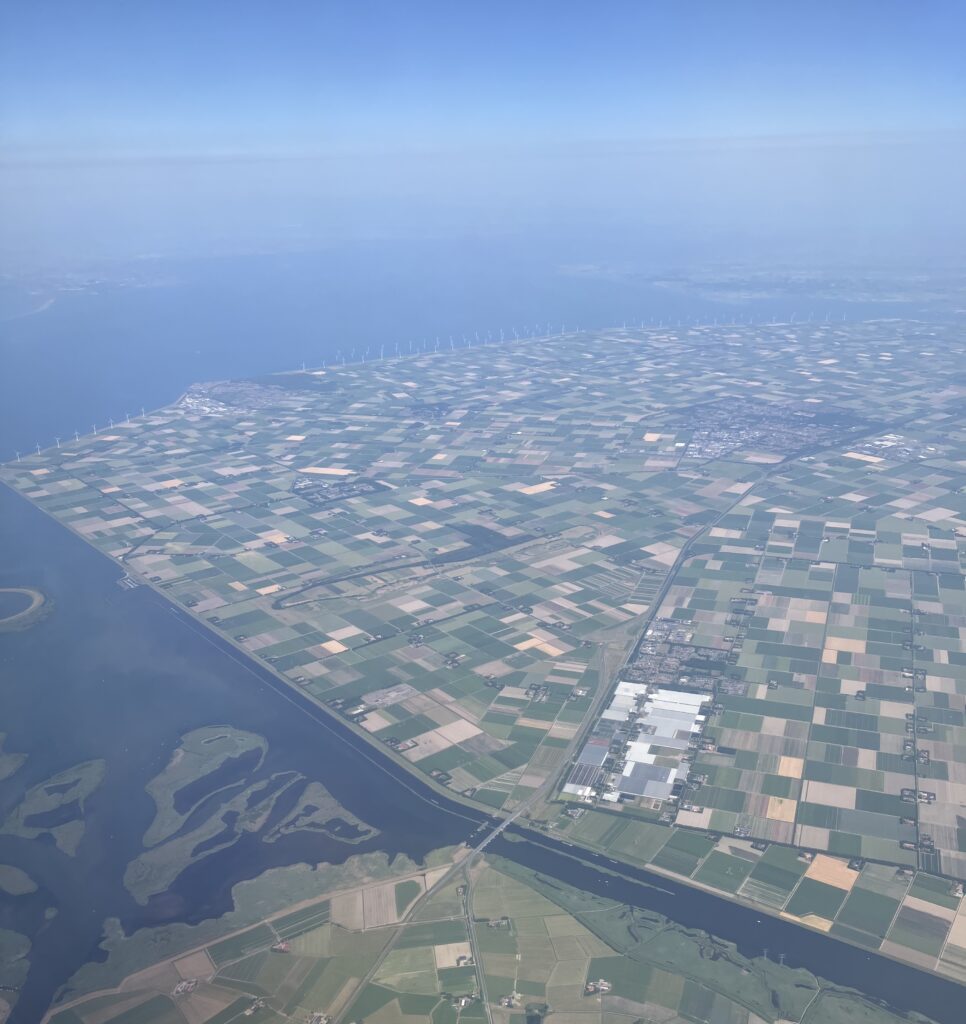
Landschap Flevoland. Foto: Jack van der Vorst.
Researchers involved
- Argyris Kanellopoulos (WUR)
- Sander de Leeuw (WUR)
- Matteo Ricozzi (PhD candidate)
Related research
Other research from work package 2
Our work packages
This work package focuses on above-ground and below-ground interactions. We look at the interactions between plants, crops, insects and other species living in the field and the differences between strip cropping and monocultures.
Work package 2 looks at the economic feasibility of investments for farmers to switch to more crop-diverse systems, such as strip farming, and what factors influence their willingness to engage in ecologically sound farming.
We want to identify different transition pathways applicable to different situations. Think of farmers with wide strips and long value chains, but also farmers with narrow strips marketing in a short chain. Or perhaps very different cropping systems that use crop diversity, such as agroforestry. We also look at what consumers and other stakeholders think and their role in the transition to more sustainable agriculture.